
I wanted to do a series like this for years, actually started it twice then put it aside, then revisited it again and now here’s the start of an ongoing series looking behind the scenes at what makes the music we love happen… Don’t worry I’ll be back soon but first here’s the man who inspired me to actually pick up the idea and run with it this time…
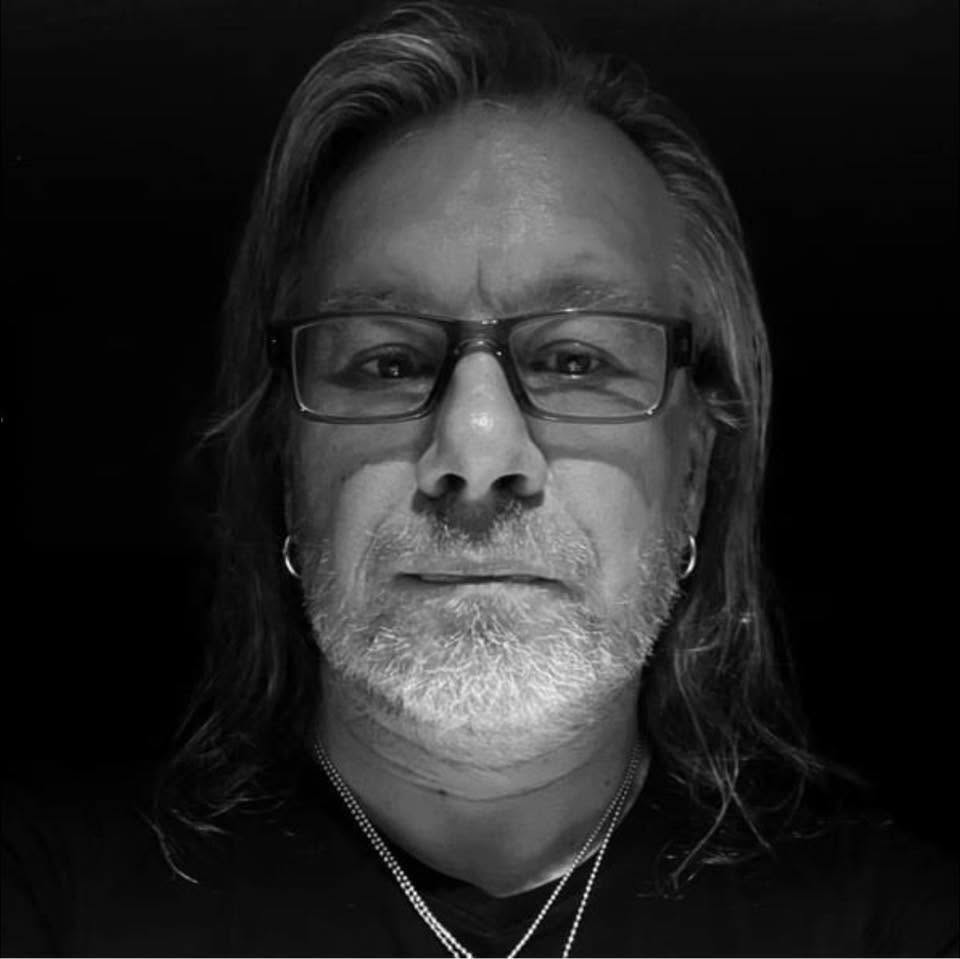
Does Slaids Ever Actually Sleep?
There are people who love music. There are people who go to gigs, buy the records, wear the shirts and follow their favourite bands around the country. Then there are those rarer people who somehow become part of the machinery that keeps a music scene alive. Andrew Slaidins — Slaids to pretty much everyone — is one of those people.
And I have a serious question. Does the man ever actually sleep?
I was introduced to Slaids by Sean Bennett, and over all the years I’ve been doing The Rockpit I honestly don’t think I’ve met anyone who shares quite the same ridiculous passion for music that I do. There are plenty who come close, of course, but Slaids seems determined to take everything to 11. Music isn’t something he simply listens to. He lives it.
He’s at the shows. He’s taking the photographs. He’s talking to the bands. He’s finding the new bands. He’s championing the bands that deserve a bigger audience. He’s interviewing artists for The Rockpit. He’s travelling. He’s reviewing. He’s promoting. He’s connecting people. And more recently he’s been there behind the scenes helping make the bloody shows happen in the first place.
That last part is important, because the real heroes of a local music scene aren’t necessarily standing under the lights.
Sometimes they’re standing just out of sight making sure everyone else gets their moment in them.
PASSION WITHOUT THE OFF SWITCH
I’ve always believed that you can tell the difference between somebody who works around music and somebody who genuinely loves music. Slaids has never left you wondering which camp he belongs to. Go back through his writing for The Rockpit and the enthusiasm is everywhere. Reviewing Palace of the King, Shotgun Mistress and Stonetrip at Shotkickers, he opened simply:
“Tonight, Melbourne was treated to one of the finest line ups of local rock bands.”
It’s a simple line, but it says a lot about him. He doesn’t treat the local scene as something beneath the international acts. There isn’t the slightest hint of these guys are pretty good for a local band. If something is great, it’s great. If a Melbourne band blows him away, he’ll tell you. If an unknown artist deserves attention, he’ll give them some.
And that’s what local music desperately needs, not people waiting until a band becomes successful before telling everybody they were there at the beginning. It needs people who actually are there at the beginning. Slaids is.
In that same review he described Shotkickers as becoming one of his favourite Melbourne venues and talked about a room filled with “familiar faces of those who devote themselves to live music on every level.” That phrase could just as easily have been written about him. Devote themselves to live music on every level. That’s Slaids.
SHOT BY SLAIDINS
Then there’s the photography.
Rock photography is one of those things everyone thinks is easy until they try it. Dark rooms. Ridiculous lighting. Red lights. Blue lights. Smoke. Musicians who refuse to stand still. Three songs if you’re lucky and sometimes considerably less to somehow capture what it actually felt like to be there. Slaids has developed a great eye for it.
His Shot by Slaidins Photography work has become another extension of that passion. His images have accompanied Rockpit coverage from sweaty club shows to major touring acts and festivals, but again it’s the local artists that matter here. The camera isn’t just documenting them, it’s giving them something.
A great live photograph becomes a poster, a social media image, a tour memory, a press shot, a little frozen piece of a band’s history. Long after we’ve forgotten the set list, one photograph can take you straight back into that room. And Slaids has created an awful lot of those moments.
The Rockpit archive tells the story. A Sisters Doll interview carries the credit “Photo by Shot by Slaidins Photography.” Elsewhere you’ll find his photographs accompanying national tour coverage. But whether he’s shooting an established international artist or somebody playing a small Melbourne room, the enthusiasm behind the lens seems exactly the same.
Because to Slaids, the important thing is the music.
50 SHADES OF SLAIDS
Then, of course, there is 50 Shades of Slaids. What started as another voice within The Rockpit has developed into something with a personality completely of its own. And just look at the names he’s spoken to:
Scott Ian. Zakk Wylde. Jeff Martin. Diesel. Jerry Cantrell. Tim “Ripper” Owens. Chris Harms. Toby Jepson. Girish Pradan. PJ Farley. Christian Livingstone. Chris Cuffaro. Stevie Rachelle. Members of Nervosa, H.E.A.T., The Cruel Sea, The Datsuns, Sisters Doll and countless others.
But the thing I love most about 50 Shades isn’t the famous names. It’s that Slaids can interview an international rock star one day and then give exactly the same enthusiasm to an Australian independent band the next. That matters much more than you think.
The Rockpit has always tried to cover music that way. We’ve interviewed some enormous names over the years, but if you’re genuinely interested in music then discovering the next great band should be every bit as exciting as talking to somebody whose records you’ve owned for thirty years. Slaids gets that instinctively.
Look at his coverage of Electric State. They’re not simply another name filling space on a website. When the Perth band signed with X-Music, Slaids got the whole band together to talk about the signing, new music and what came next. Look at Sisters Doll. Cicadastone. The Dreadful Tides. Warbirds. Karly Jewell. Riff Raiders. Parabelum. Audio Reign. The Revolation. Kalatone.
These aren’t boxes being ticked. They’re conversations happening because he actually cares.
His tastes are broad too, which is another thing I love. Slaids isn’t standing at the gates checking whether something meets an approved definition of cool. If it’s good, if it’s honest, if someone is putting their heart into it, he’s interested.
That’s what good music journalism should be. Something I completely and utterly know to be true: curiosity rather than cynicism.
ROCK IS NOT DEAD
And then somehow — presumably after discovering a secret 31-hour day the rest of us don’t know about — Slaids found another gear. That gear was Rock Is Not Dead.
The festival series feels almost like the inevitable destination for everything that came before it. Supporting bands is one thing. Interviewing them is another. Photographing them is another. But eventually you reach the point where support means rolling up your sleeves, getting behind the curtain and helping put the artists on the stage.
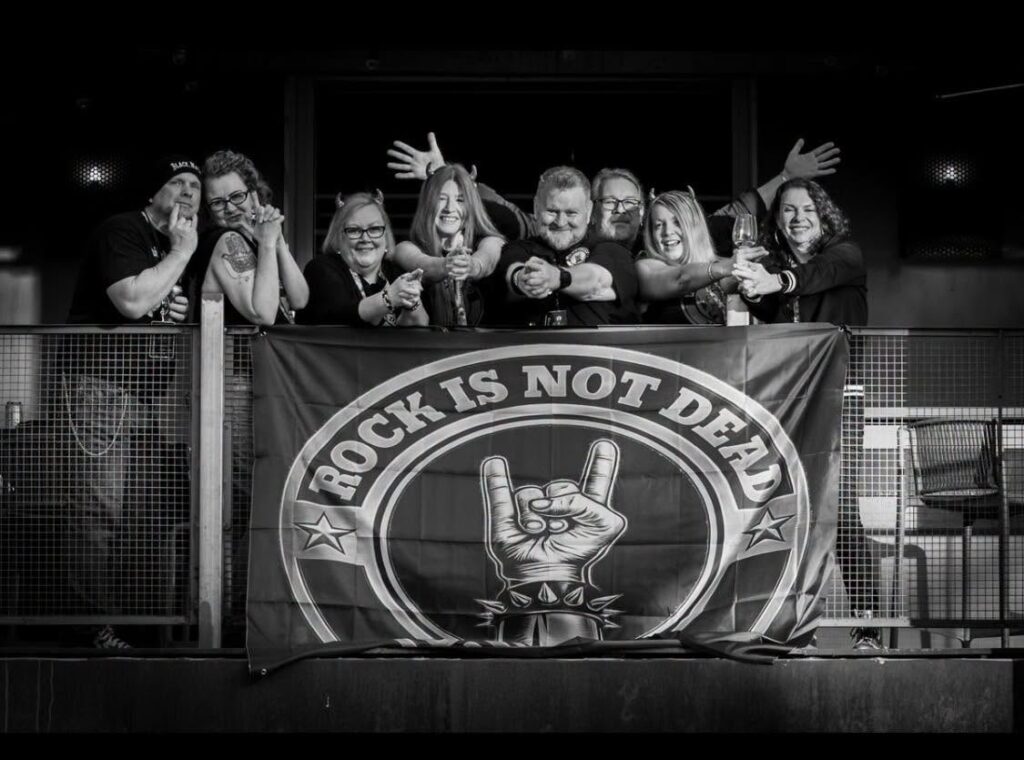
Rock Is Not Dead 1, 2 and 3 saw Slaids move into stage management, and somehow that feels entirely appropriate. Because stage management isn’t glamorous. If you’ve done your job brilliantly, most of the audience will never know your name they’ll just know they had a fantastic night.
Bands need to be where they’re supposed to be. Changeovers need to happen. Equipment needs to move. Schedules need to survive contact with reality. Problems need solving before most people even realise there was a problem. And while somebody else gets the applause, you start thinking about what needs to happen next.
That’s an unsung hero.
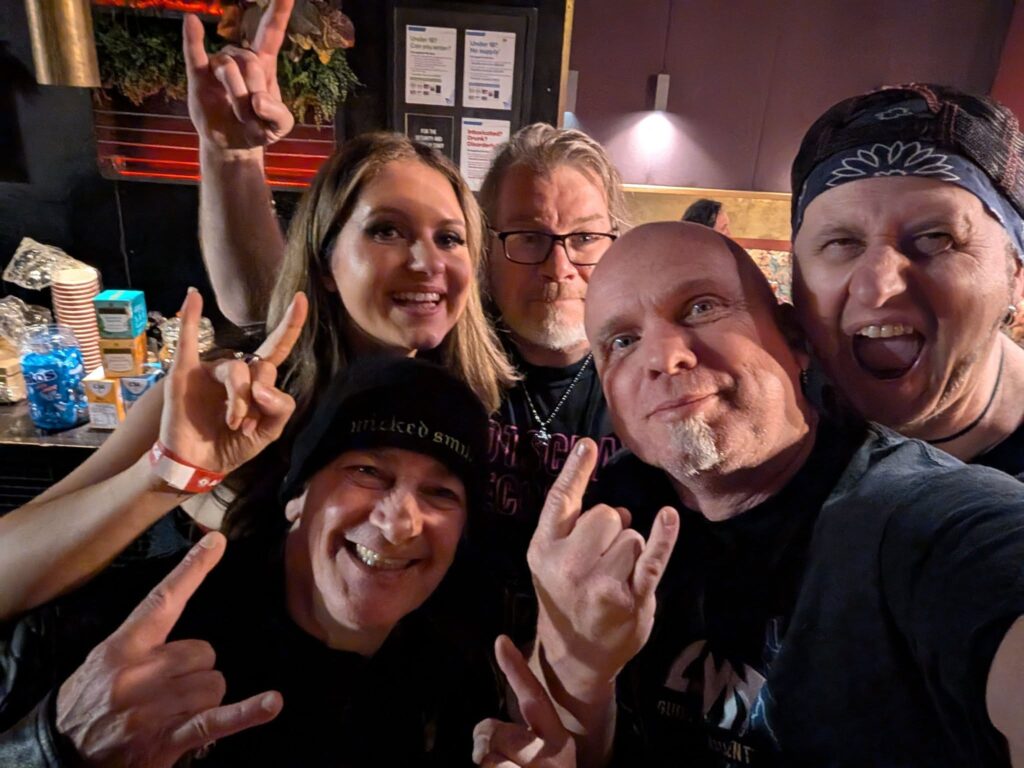
By the time Rock Is Not Dead reached Melbourne, Slaids’ 50 Shades interviews had effectively become a running introduction to the people who would populate that stage. Warbirds talked about their journey and the festival. Parabelum discussed making the trip from Western Australia for their first show outside WA. Electric State, The Revolation, Audio Reign, Kalatone, Cassidy Paris, Karly Jewell and Riff Raiders all became part of the story.
Think about that for a moment. He’s not just standing at the side of the stage watching bands he likes anymore. He’s helping create the stage for them.
THE PEOPLE WHO KEEP THE LIGHTS ON
We talk constantly about supporting local music, but sometimes I’m not convinced everyone understands what those words actually mean. Supporting local music isn’t sharing a poster once on Facebook. It’s buying the ticket. It’s turning up early enough to see the support band. It’s buying a shirt when you can. It’s telling somebody about the new band you discovered. It’s taking the photograph. It’s writing the review. It’s conducting the interview. It’s giving a young artist space alongside an international name.
It’s also driving across town on a freezing Melbourne night when staying home would have been considerably easier. It’s doing all of that again next week. And the week after.
Local scenes don’t survive because somebody somewhere decides they should. They survive because people care enough to keep turning up.
Musicians obviously sit at the centre of that world, but around them is an ecosystem of photographers, writers, promoters, venues, sound engineers, stage crews, radio presenters, publicists, independent labels and the hardcore fans who still believe that discovering a great band in a small room is one of life’s great pleasures.
Take those people away and eventually the lights go out. Slaids is one of the people keeping them on.
TAKING IT TO 11
Maybe that’s why I connected with him so quickly when Sean introduced us. After doing The Rockpit for all these years, I know exactly how irrational loving music this much can sometimes seem to normal people. You finish an interview late at night and start editing it. You travel hours to see a band.
Then you hear a new artist and immediately want somebody else to hear them. You spend money you probably shouldn’t on another record. You stand in a venue thinking, How the hell are there only fifty people here watching this? You want to tell the world.
I’ve met thousands of musicians and music people over the years, and plenty of incredibly passionate ones. But it’s rare to meet somebody and recognise that same slightly obsessive spark. I saw it immediately in Slaids. The difference is that he might actually be worse than me. I mean that as the highest possible compliment. He takes it to 11.
I’m still not entirely convinced he sleeps.
THE UNSUNG HERO
The phrase “unsung hero” gets thrown around far too easily, but the music industry has always been full of them. They’re the people whose names aren’t on the ticket. The people who don’t get the encore. The people whose work happens in the hours before the doors open and long after everybody else has gone home. Andrew Slaidins is one of those people.
He’s a photographer. An interviewer. A reviewer. A stage manager. A supporter. A fan.
And I suspect that last word is actually the most important of all.
Because underneath Shot by Slaidins, underneath 50 Shades of Slaids, underneath Rock Is Not Dead and the hundreds of interviews, photographs, reviews, kilometres and late nights, there’s simply a bloke who absolutely fucking loves music. You just can’t manufacture that. You definitely can’t teach it.
And you certainly can’t fake it for this long.
Local music needs people like Slaids because passion is infectious. One person champions a band. Someone else checks them out. Someone buys a ticket. Someone brings a mate. Fifty people becomes a hundred. A support slot becomes a headline show. A local band crosses a state border for the first time. People start talking.
Scenes are built from moments like that. And they’re built by people prepared to put the work in when nobody is watching. So this one isn’t for the singer at the microphone or the guitarist standing in the spotlight. It’s for the bloke at the side of the stage, probably carrying a camera, probably thinking about his next interview, probably worrying about the changeover and almost certainly already planning the next gig.
Andrew “Slaids” Slaidins. One of the genuine unsung heroes of Australian local music.
And mate, seriously…
Get some sleep.