
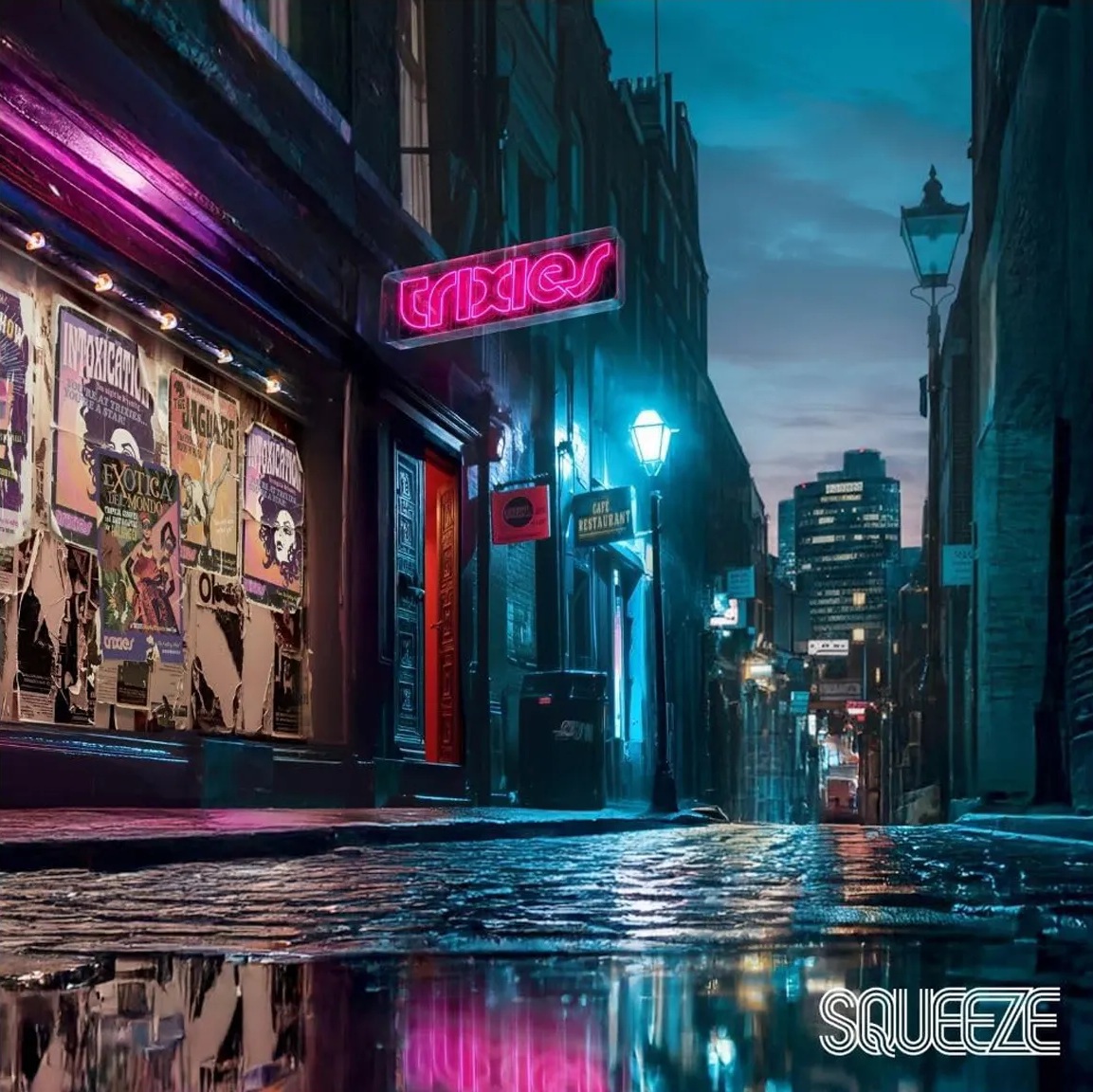
There’s something deliciously awkward about a “lost” concept album finally stepping into the light decades after its uncertain inception, and Trixie’s by Squeeze leans into that faux-naïve ambition with a grin. You get the feeling you’re not just hearing a record, but stepping into a time capsule — one that smells faintly of stale lager, cigarette smoke and big ideas sketched in biro on the back of a setlist in a club just like Trixies.
Opening with What More Can I Say, the album frames itself as an overture to a long night that’s already happened. It’s woozy, reflective, almost hungover and feels less like teenage bravado and more like righteous inevitability. From there, You Get The Feeling drifts in like yacht-rock left in dry dock: languid, vibey, and knowingly detached (well we are in England not L.A. after all). You get the feeling the band are both inhabiting and observing the scene at once with a preference for the latter but succumbing to the former ‘if they have to’….
This isn’t the polished pop wit of early Squeeze singles. The sonics and melodic instincts are unmistakable, but here they’re rougher, moodier — more Channel 4 B-movie in the mid-’80s than chart-bound smart-pop glory. The Place Called Mars is beautifully Beatlesque and Hell On Earth has the real in your face energy of early Squeeze and drags us through nightclub shadows and low-life vignettes, all staccato piano and back-alley unease. It’s Soho before gentrification, painted in baroque hues and neon bruises. It’s so bloody good for a couple of teenagers!
There’s a surprising emotional weight, too. The Dancer peers past the sleaze to find vulnerability, while Good Riddance restores melodic sensibilities without sanding off the grit. Even when the vintage glam stomp of Why Don’t You shows its age, but you get the feeling that’s the point — this is Rock and Roll archaeology, not reinvention, just a little light dusting of artefacts.
By the time the two-part title track closes proceedings in a haze of raunch and resignation, it’s clear this was always ahead of itself — gloriously so. Not because it predicts the future, but because it refuses to tidy up and square away the past. I’d love to think my teenage book concepts would shine as brightly decades later…
In the end, I loved it. Listening to Trixie’s is like peeling back decades-old wallpaper and finding something stranger, darker and far more interesting underneath. It may not have the diamond-cut sparkle of vintage Squeeze, but it has atmosphere, nerve and the thrill of discovery — and sometimes that’s even better.