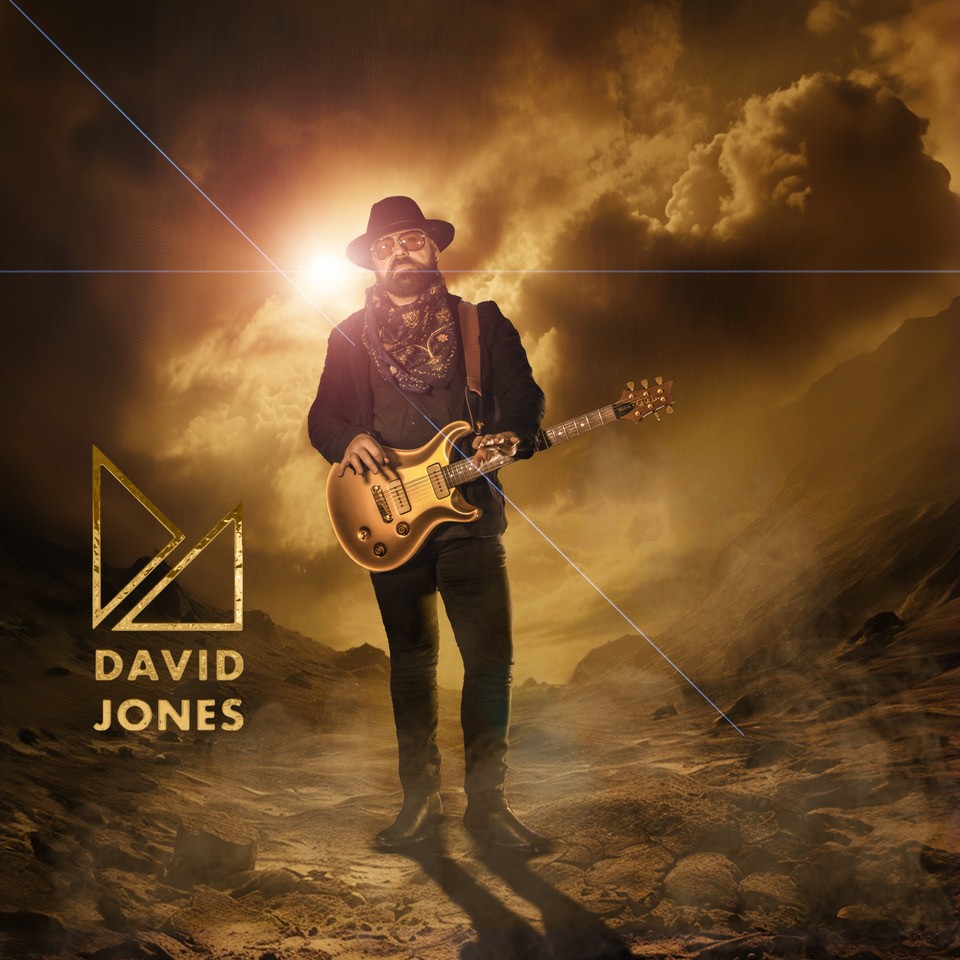
Rock songs, the good ones, are always more than the sum of their parts. They contain a ghost architecture: the echoes of other songs, other rooms, other lives. David Jones’ Between My Shadow and the Sun arrives with that sensation fully intact. It’s not nostalgia—it’s recognition. The riff that opens the song doesn’t belong to a genre so much as to a history of urgency: that clang of strings which says something matters, and you’re about to be told what it is. Jones has been around—Choirboys, Ross Wilson, Dale Ryder—so he knows the scaffolding of a rock song. But here, he isn’t content to just build it again. The guitar figure is frenzied but deliberate, like a code tapped on a prison wall. Then the verse: moody, spacious, an intake of breath before the lift. And when the chorus lands, it isn’t just bigger—it’s brighter, like stepping out from under an awning into sun that blinds you for a moment.
The lyric holds a simple but inexhaustible idea. The shadow is what we leave behind. The sun is what we inherit. It’s a line drawn between consequence and possibility, and Jones spends the song urging you to use that daylight while you have it. “Take the light that is given” is less a plea than a command, and the repetition works like the chorus in a folk ballad—you know it’s coming, and each time it arrives it binds you tighter to the song’s core. There’s a sense, too, of folk process here—imagery that could be lifted from any decade, any place where bones rust and messages are left in the dirt. Jones trades in images that are both physical and spectral: semaphore spoken by bones, skeletons as text. The bridge pushes him higher vocally, his voice stretching like a tightrope above the arrangement, before falling back into the riff that started it all. Between My Shadow and the Sun belongs to the continuum where rock meets myth—where personal inheritance becomes collective memory. In the end, it’s less about whether you sing along than whether you understand that you’re now part of its ledger. Songs like this, the good ones, don’t just play for you—they mark you.